
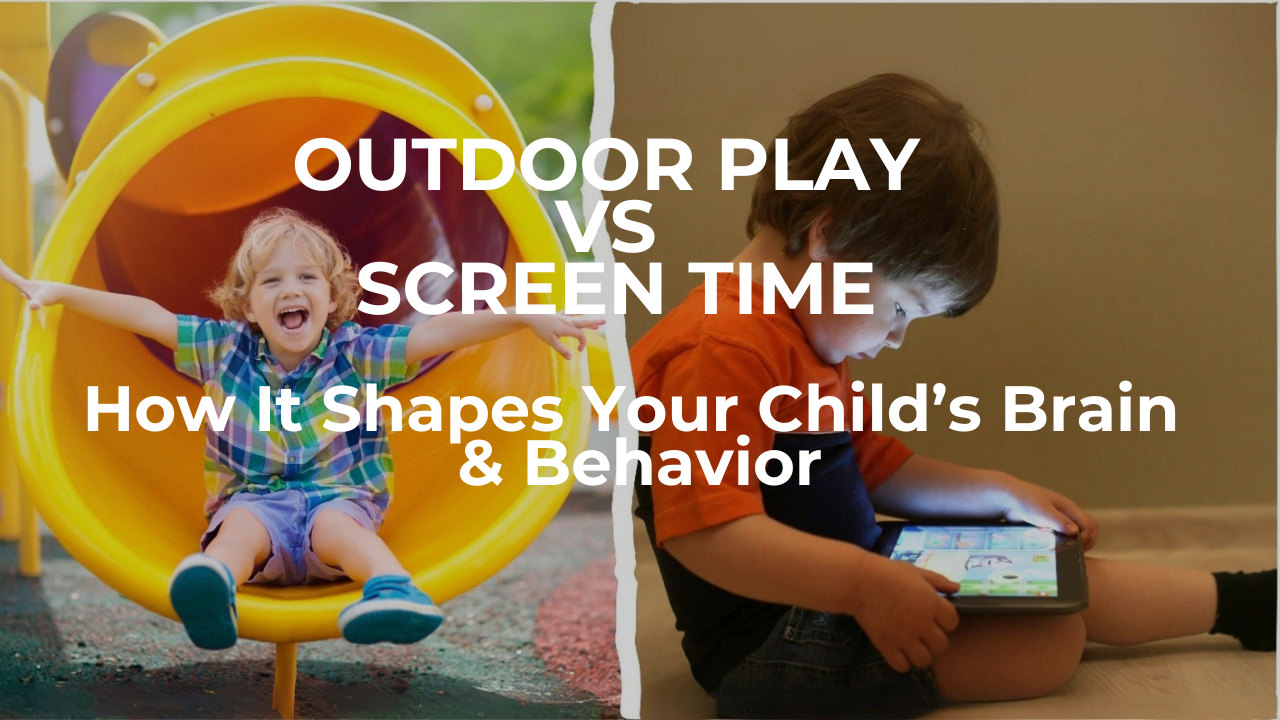
Outdoor Play vs Screen Time: Effects on Child Development and Behavior
Outdoor Play vs Screen Time: Effects on Child Development and Behavior
Walk into most homes on any given afternoon, and you'll usually see the same scene. Kids on the couch, eyes locked on a screen, while the backyard sits empty outside. It's not anyone's fault in particular. Screens are convenient; they keep kids occupied, and modern life naturally leans toward them. The issue isn't the presence of screens; it's how easily they become the default, and what slowly gets replaced once that happens.
Outdoor play isn't simply a healthier alternative. It's a completely different environment for development. It shapes how children think, move, relate to others, and regulate themselves in everyday life.
What does outdoor play actually build that screen time can't?
Outdoor play is often seen as a way to tire kids out, but it's doing far more than that. Running, climbing, balancing, and jumping build coordination, spatial awareness, and physical confidence. The brain and body develop together in childhood, and movement is one of the key drivers of that connection. A screen can hold attention, but it can't replicate the varied, unpredictable movement that builds real physical development.
There's also a specific kind of confidence that only comes from physical experience. When a child falls, adjusts, and tries again, they begin to trust their own ability to handle challenges. Whether it's climbing higher, exploring new spaces, or figuring something out without help, resilience gets built through repetition and lived experience. It isn't taught; it's earned.
How does outdoor play support creativity, social skills, and emotional regulation?
Boredom is often misunderstood. It's not a problem to fix; it's a signal that something new needs to be created. When a child is handed over a screen, there's no gap left to fill. When they're given a backyard and sometime instead, something different happens. Games appear, rules get invented, ordinary objects take on new meanings, and imagination starts leading to the experience. That process builds problem solving and creativity in a way structured content rarely manages.
Social skills develop in much the same way, through real interaction rather than instruction. Children don't learn social awareness by being told how to behave; they learn it by working out rules with other kids, handling disagreements, taking turns, and reading emotions in real time. These are the moments where communication, empathy, and emotional understanding take shape, not as theory, but as something lived.
There's a noticeable difference in children who spend regular time outdoors, too. Natural light, movement, and reduced overstimulation all help regulate the nervous system. Many parents notice better mood, sharper focus, and easier transitions between tasks when outdoor play is a regular part of the day. Excessive screen time, on the other hand, can leave children overstimulated, which often makes it harder for them to settle or shift their attention from one thing to the next.
Screens are also built around instant feedback, while outdoor play rarely offers that. Building something takes time, trying something takes a few goes, and progress is rarely immediate. That gap between effort and result is exactly where patience develops. Children who spend more time in unstructured outdoor environments tend to handle frustration and delayed rewards more easily, simply because they've had more practice sitting with both.
What actually helps families make outdoor play happen more often?
Nobody needs another guilt trip about screen time, so these are a few approaches that genuinely tend to work for families, rather than just sounding good on paper.
Outside time works best before screens get switched on, not after, since once a screen is on, getting kids off it again becomes much harder. Keeping bikes, balls, and chalk somewhere visible near the back door makes a real difference too. If it takes effort to find the gear, it usually doesn't get used. Getting involved in yourself, even just for ten minutes, tends to extend how long kids stay outside.
A quick game of footy with a parent often does more than any instruction could. Letting kids sit with boredom for a while before stepping in to entertain them also helps, since the better ideas usually show up once that initial resistance passes. And making weekends about places rather than plans, a park, a beach, or a bush trail, tends to work better than activities that are too tightly structured.
None of this is about perfection or guilt. It's about creating conditions where outdoor play has a real chance to happen. When it does, it tends to win, often without needing to be forced.
When children are given time, space, and a bit of encouragement, outdoor play still wins. The real question isn't whether it matters. It's whether we're still making room for it in how we live today.